How we fixed Mobile Vikings’ brand image in the age of AI
How we identified a critical factual error in Gemini’s responses and – through source intervention and systematic content feeding – permanently changed AI’s narrative about Mobile Vikings.
(01) PROJECT OVERVIEW
Taking control of what AI says about the brand
When we started working with Mobile Vikings, we conducted a Brand Search Presence audit across the most popular LLM models: ChatGPT, Gemini, and Perplexity. Our goal was to examine the brand’s reputation in the AI environment, its visibility, and to eliminate any hallucinations – factual errors that could negatively affect purchasing decisions.
details
Industry
Telecommunications
Market
Polish
Project type
Audit + optimization
Services
Brand Search Presence, AI Search Optimization
(02) Challenge
When AI gets your brand’s facts wrong
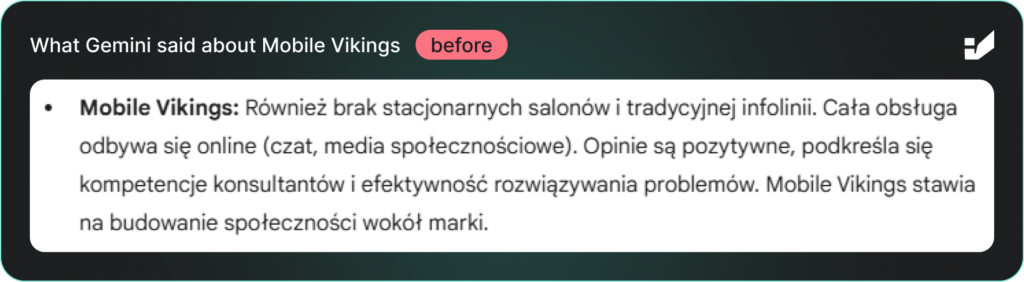
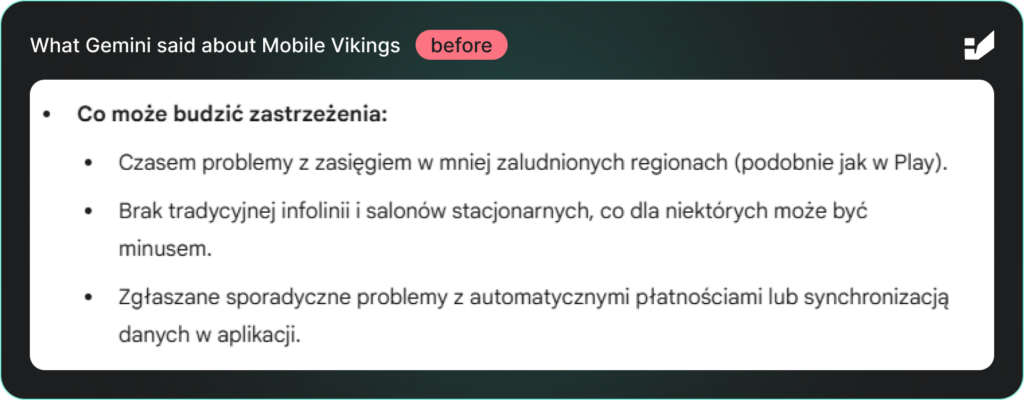
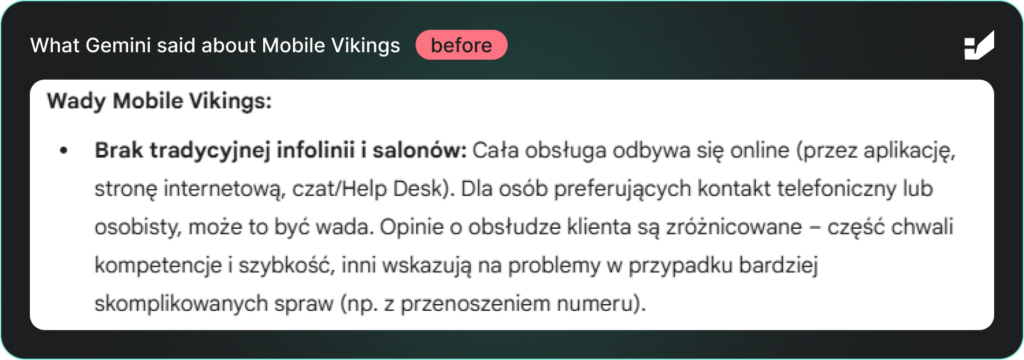
An analysis of branded, non-branded, and comparative queries (e.g. “Mobile Vikings or nju mobile – which one is cheaper?”) revealed a serious problem: Gemini was consistently identifying the lack of a traditional helpline as Mobile Vikings’ main weakness, suggesting that all customer support was handled exclusively online.
This information was completely false – Mobile Vikings operates a fully functional helpline. Nevertheless, for users researching the brand through LLMs, the apparent absence of phone support could serve as a real barrier to choosing the service. The error appeared consistently in opinion-driven and comparative queries – exactly where users make their decisions.
(03) ACTION PLAN
The fix
Correcting the false data became our top priority. To permanently change the way AI perceived the brand, we worked on two fronts:
Objective: eliminate the factual error from LLM responses and replace it with accurate, well-established information.
Actions:
- Ongoing monitoring of AI responses
- Identifying and intervening in the sources feeding LLM models
- Systematic context feeding through blog content (Data Feeding)
(04) Optimization roadmap
Multi-step process that drove results
Step 1: Identifying the source of the error
Gemini does not always cite the sources behind its answers, so tracking down the page responsible for the false information required thorough research. We identified the specific site publishing the inaccurate data. On our recommendation, the client contacted the publisher, who updated the content.
Step 2: Data Feeding – saturating the context
We knew that fixing a single source might not be enough. To give LLM models as many signals as possible confirming the existence of the helpline, we regularly fed the company blog with specific data: the phone number and helpline hours. This way, we systematically supplied the models with fresh, accurate information during their subsequent web crawling cycles.
Step 3: Monitoring AI responses
We continuously tracked Gemini’s responses to key queries, observing when and how the narrative began to change.
(05) results
Gemini changed its narrative
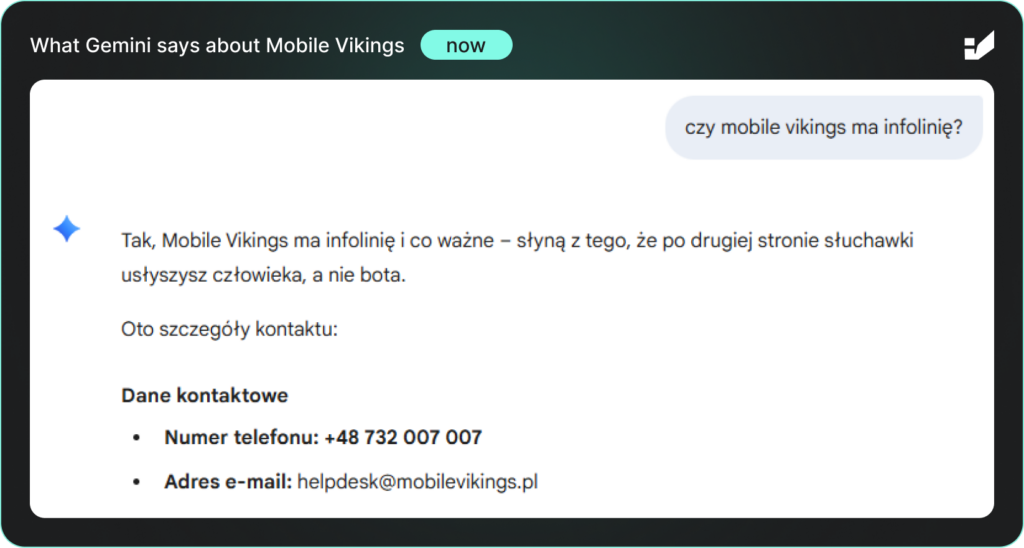
After updating the source and several months of blog content feeding, the model changed how it responded to queries such as:
- Is Mobile Vikings a good mobile operator?
- Where should I port my number – to Mobile Vikings or nju mobile?
Gemini began providing accurate information about phone support, even citing the specific contact number. The argument about a missing helpline disappeared from the brand’s list of weaknesses.
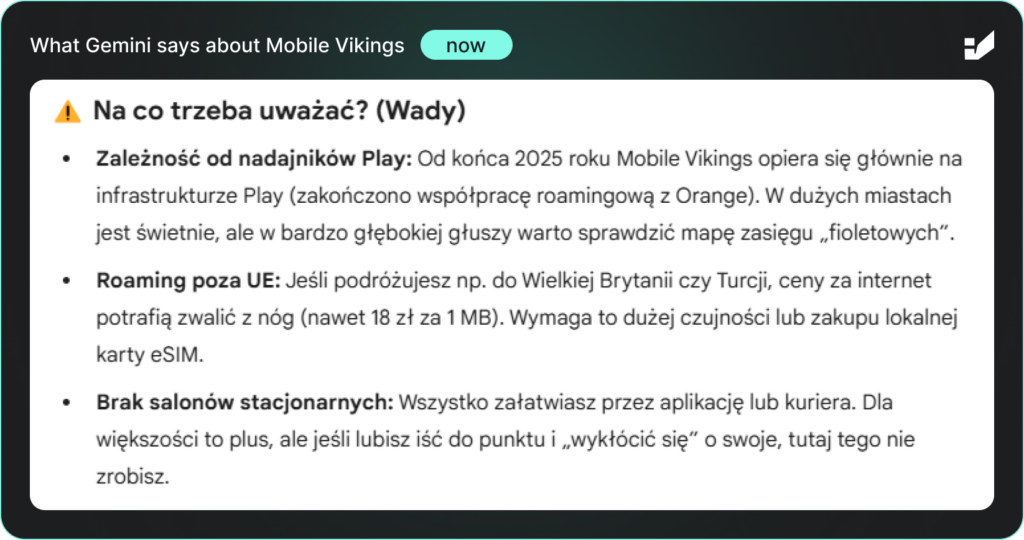
By taking these steps, we eliminated a critical factual error from the purchase journey. The improvement in LLM reputation directly removed a barrier to entry and unlocked the brand’s full potential for acquiring new users through AI channels.