Masterlease: How publishing a single piece of content led to stable brand visibility in AI-generated answers
How a blog post started appearing in ChatGPT, Copilot, and Perplexity within 24 hours of going live
(01) PROJECT OVERVIEW
Masterlease has a long track record in SEO. In a parallel project, the company had been building out local structure and topical content clusters around long-term vehicle leasing – work that drove measurable growth in non-branded organic traffic. A different question was emerging alongside classic SEO: can newly published content appear not just in Google, but in the answers generated by AI models – ChatGPT, Copilot, Perplexity – before it has had any chance to build topical authority?
The answer came through a straightforward, repeatable experiment: publish a blog post that genuinely addresses the questions real customers ask, then track when and how often LLMs start citing it as a source. The test ran across two articles – one covering the purchase of pre-lease vehicles (a topic where Masterlease already had some presence), and a second covering fleet management, where the brand had no prior visibility whatsoever.
DETAILS
Industry
Automotive
Market
Poland
Collaboration model
Long-term partnership
Project type
Ongoing retainer
Services
AI Search Optimization
(02) CHALLENGE
LLM citations with no predictable pattern
Before the test began, the situation looked like this:
- The brand had occasional, unstable mentions in LLM responses – appearing and disappearing without any clear pattern. In one case, a mention dated May 28th preceded the publication of the article it supposedly referenced, which illustrated just how unpredictable these citations were.
- There was no data on how much time typically passes between a page being indexed and it appearing as a cited source in AI-generated answers.
- It was unclear whether LLM citation required prior topical authority, or whether a well-written new piece of content could start ranking without it.
- There was no answer to a core business question: does content optimised for LLM visibility cannibalise organic traffic from Google, or do the two channels grow in parallel?
Without answers to these questions, planning a content strategy for AI Search meant making decisions based on assumptions rather than data.
(03) GOAL
Measure it, don’t guess
The test objectives were defined narrowly and with measurable outcomes in mind:
- Determine how quickly LLMs respond to newly indexed content.
- Check whether a blog post with no prior topical authority can start appearing in AI-generated answers.
- Assess whether citations are stable over time – a one-off novelty effect or lasting visibility.
- Find out whether LLM-optimised content comes at the expense of Google traffic, or works alongside it.
Monitoring was carried out using LLMonitor – a tool that tracks brand appearances and position in responses from ChatGPT, Copilot, and Perplexity, including the specific sources each model cites.
(04) HOW THE TEST RAN
Stage 1: First publication, first citation
The starting point was an unstable, low brand presence in LLM responses – sporadic mentions with no clear pattern. On June 3rd, a blog post about buying pre-lease vehicles started appearing as a cited source in LLM answers, less than 24 hours after being indexed.
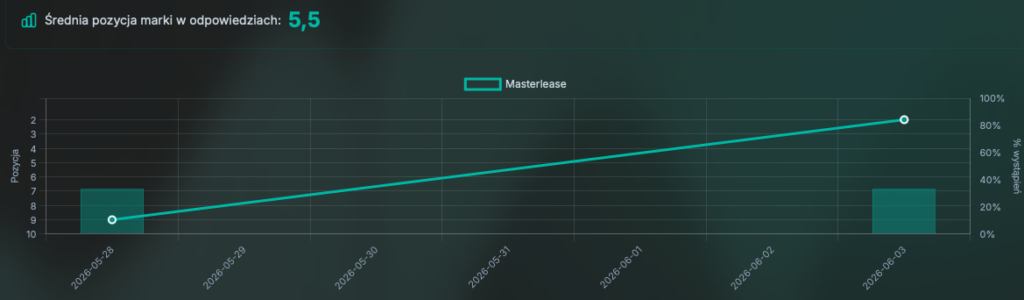
Average brand position in LLM responses, 28 May – 3 June 2026 – from position 9 to position 2 (based on data from our proprietary tool, LLM Monitor).
From position 9 to position 2 in under a week. Average brand position in LLM responses improved from 9 (May 28th) to 2 (June 3rd), with brand appearances reaching 5.5 – a level that had been out of reach before the article existed.
The same day also surfaced an earlier mention from May 28th – before the article was published – in a different, leasing-related context. This underlined how inconsistent and unpredictable citations had been up to that point.
Stage 2: Stabilising as a regularly cited source
A few hours later, a follow-up check showed the article appearing as a popular source in Copilot and Perplexity responses – without yet being embedded in any broader brand narrative.

The Masterlease brand appearing as a cited source in an AI-generated response to a query about buying a pre-lease car.
At this stage, the test was holding up well. The absence of a surrounding brand narrative didn’t prevent citation – the model treated the article as a credible factual source (checklists, safe models, where to buy) even without a branded introduction.
Stage 3: Proving there’s no cannibalisation
A week later, the test was extended to include Google Search Console data – to check whether the LLM-optimised article was also generating organic traffic, and whether it was doing so at the expense of other pages on the site.
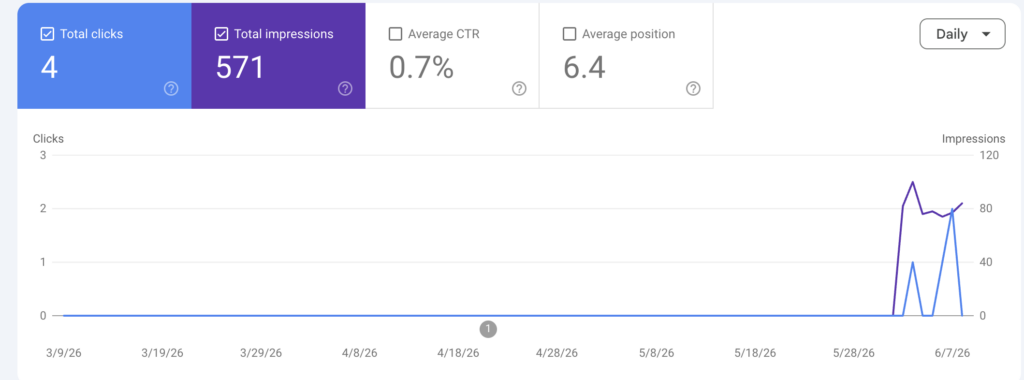
Google Search Console: 4 clicks, 571 impressions, 0.7% CTR, average position 6.4.
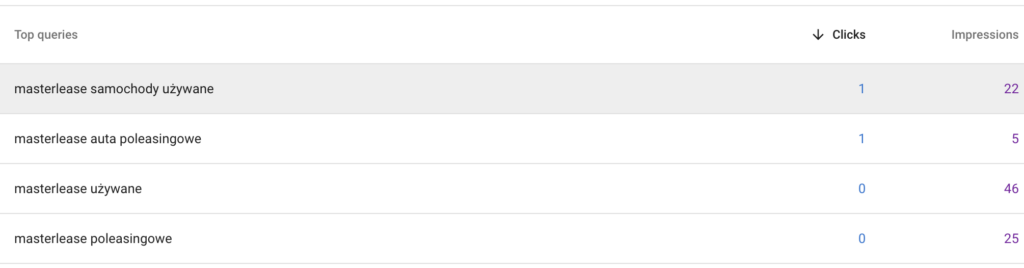
Top queries driving traffic to the article in Google.
The article started generating clicks in Google – with no cannibalisation risk. Content written with LLM visibility in mind simultaneously started ranking in classic search: 4 clicks and 571 impressions in the first weeks, driven by queries like ‘masterlease used cars’ and ‘masterlease pre-lease vehicles’ – queries no other page on the site was targeting.
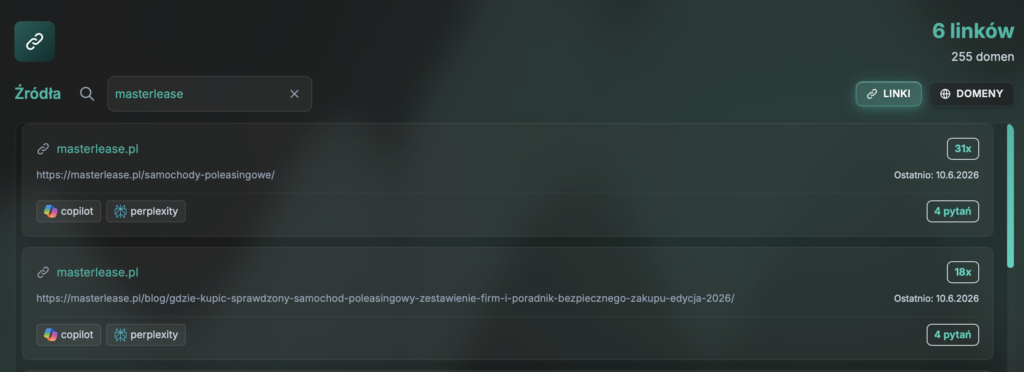
Links to the article cited by Copilot and Perplexity, with citation counts and last cited dates.
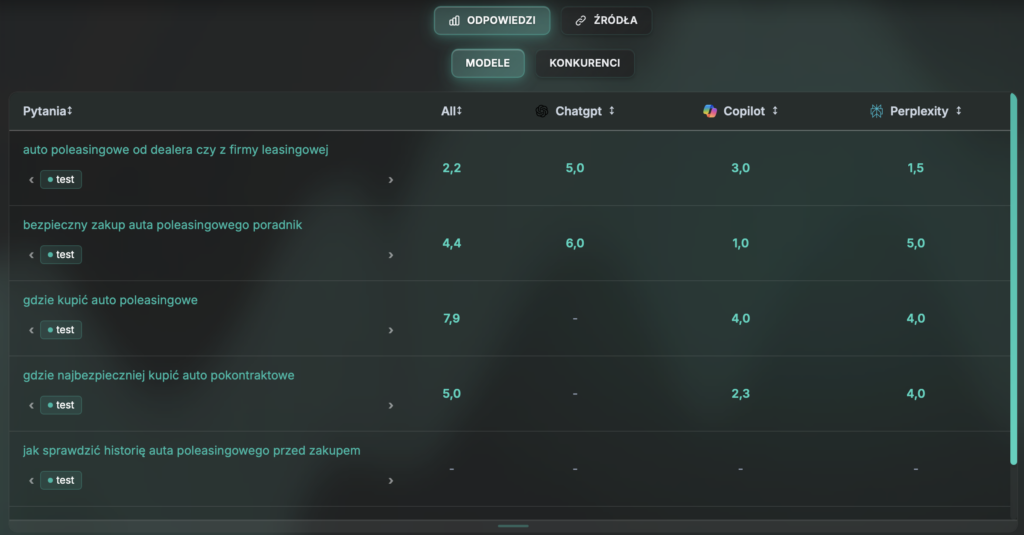
Article positions in responses across models (All, ChatGPT, Copilot, Perplexity) for the tested queries.
LLM results stayed stable throughout. There was one dip in visibility, but after it the results didn’t just recover – they improved. The article started being cited on a par with the brand’s service page, despite that page having a much longer indexing history.
Stage 4: Testing without topical authority
The first test covered a topic where Masterlease already had some presence (pre-lease vehicles). To check whether the same mechanism works without any prior authority, a second article was tested – on corporate fleet management (CFM), a topic where the brand had no ranking history at all.
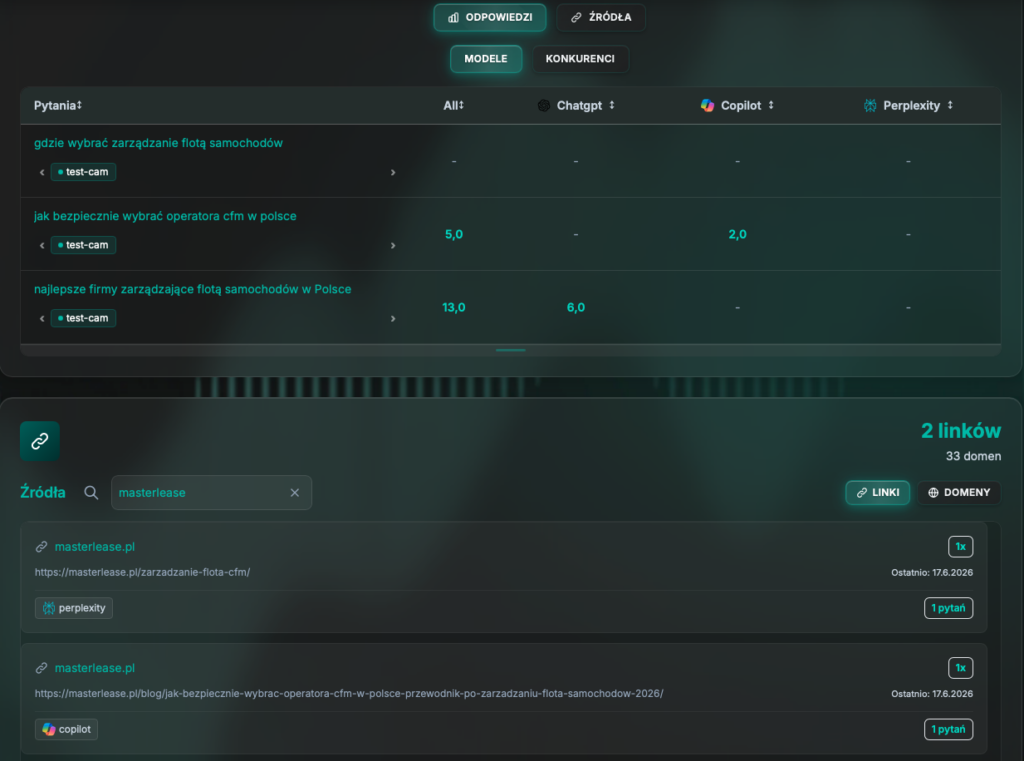
Model response positions for fleet management queries — All / ChatGPT / Copilot / Perplexity breakdown, 17 June 2026.
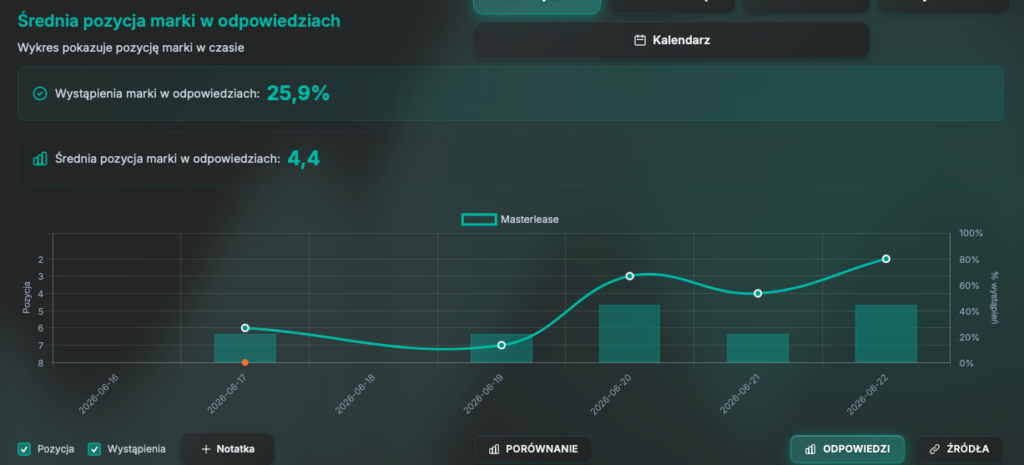
Brand position in LLM responses, 16–22 June 2026 – 25.9% appearances, position 4.4.
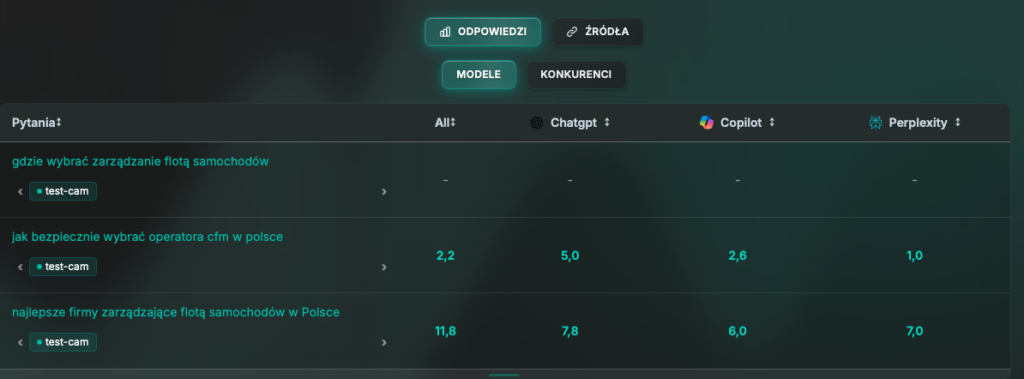
Article positions in responses across models (All, ChatGPT, Copilot, Perplexity) for fleet management queries – 22 June 2026.
You can rank without topical authority – just more slowly. The article started being cited day by day despite the brand having no prior presence in the fleet management space. Not all models responded at the same time — Copilot and Perplexity picked it up first — but the direction was clear.
Stage 5: Growth through a Google algorithm update
Weekly check-ins confirmed the effect wasn’t a one-off. By June 22nd, the fleet management article had become one of the most frequently cited sources for the brand across all monitored content.
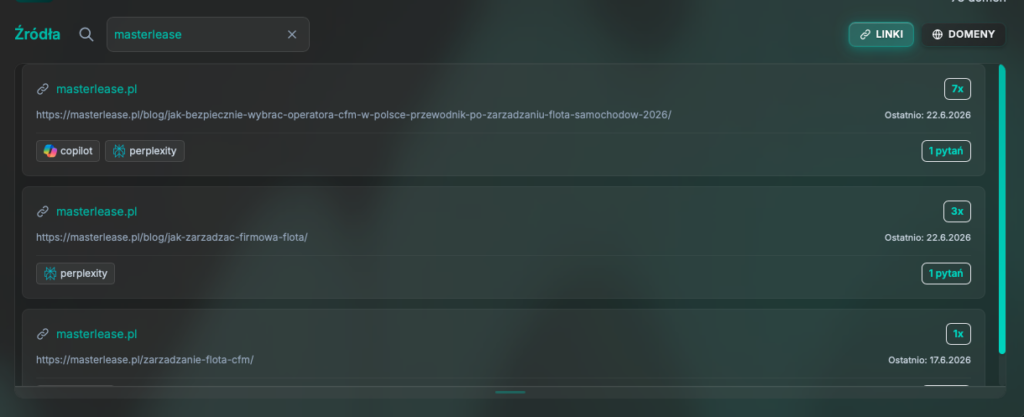
Sources cited by models for CFM queries, as of 22 June 2026.
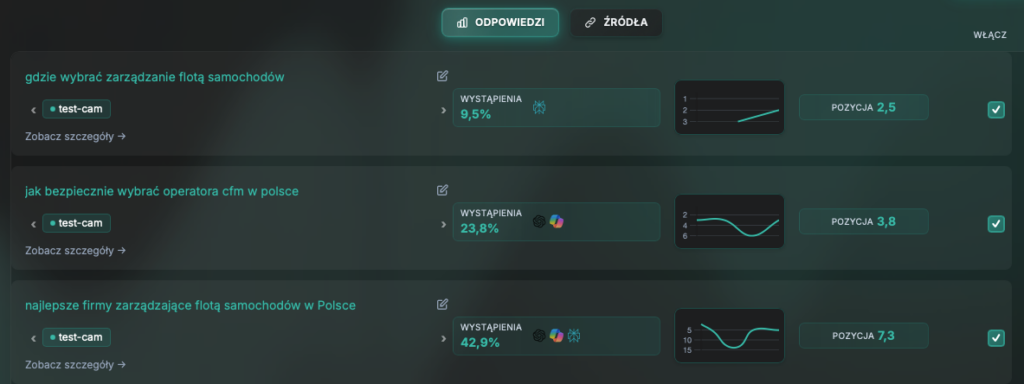
Brand appearances and positions per query – final week of the test (25.4% avg., position 4.5).
The most significant test came later. In the final week of June, Google rolled out an algorithm update targeting artificially created ranking content – articles published purely to gain positions. The test article, despite being part of an experiment, wasn’t that kind of content: it was built to answer real customer questions, which appears to have insulated it from the update’s impact.
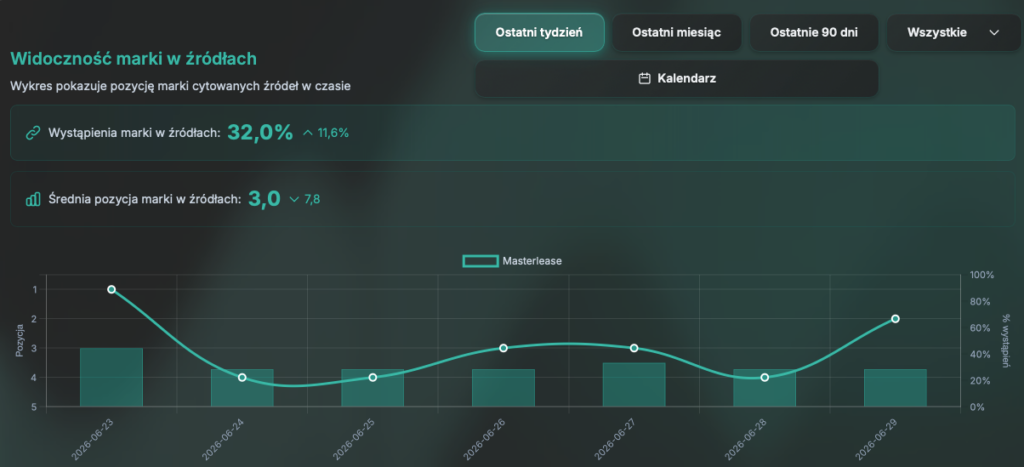
Brand visibility in cited sources: 32.0% appearances, average source position 3.0.
Results improved precisely when the update was hitting content like this hardest. The brand started ranking for ‘where to choose fleet management’ – a query it hadn’t appeared for at all – at the same time competitor content optimised purely for ranking was losing visibility.
(05) Results
Numbers across the full test period
| Metric | Before | After |
| Average brand position in LLM responses | 9 (28 May) | 2 (3 June) |
| Brand appearances in responses (article 1) | sporadic, unstable | 5.5 / TOP 2 position |
| Brand appearances in responses (article 2, CFM) | 0% — no ranking | 25.9% (avg. position 4.4) |
| Brand visibility in cited sources (article 2) | none | 32.0% (avg. position 3.0) |
| Ranking for ‘where to choose fleet management’ | none | present, despite Google’s anti-spam update |
| Google clicks (article 1, GSC) | 0 | 4 clicks / 571 impressions |
| Cannibalisation of other pages’ traffic | — | none — new, previously uncovered queries |
From indexing to LLM citation: under 24 hours. The first article started being cited in ChatGPT, Copilot, and Perplexity the day after indexing. Within a week, the brand’s average position in AI responses had moved from 9 to 2.
Topical authority helps – but it’s not a prerequisite. The second article, covering a topic with no prior brand presence, also started being cited – more slowly and selectively at first, but within a few weeks it reached 25.9% brand appearances and became the most frequently cited source across all monitored content.
LLM content doesn’t come at the expense of Google. The article simultaneously generated real organic clicks on queries no other page on the site had previously covered. Visibility gains in AI Search and in classic search moved together, not against each other.
Content built around real user questions held up through Google’s anti-spam update. While the algorithm update was pushing down artificially created ranking content, the test article was gaining ground – picking up rankings on a query it hadn’t appeared for at all.
Key takeaways
- Content freshness has a direct impact on LLM citability – models react to newly indexed sources significantly faster than the pace of change in classic Google search would suggest.
- Lack of topical authority doesn’t rule out AI Search visibility, though it slows and limits reach at the start – an important input when planning content for topics where the brand is still building its position.
- Content designed to answer real customer questions – rather than just chase rankings – also holds up in classic SEO, including through algorithm updates targeting spam.