9 Ideas on Where to Draw Inspiration for a Blog Content
The best blog topics come from what your audience already asks: in search engines, in AI assistants, on forums and in messages to your customer service. Tools help you find those questions; your own experience and data make the answers worth reading. Below are 12 sources we use to plan content, plus a quick way […]

The best blog topics come from what your audience already asks: in search engines, in AI assistants, on forums and in messages to your customer service. Tools help you find those questions; your own experience and data make the answers worth reading. Below are 12 sources we use to plan content, plus a quick way to check whether an idea is worth writing.
Key takeaways
- Start with your own data: Search Console queries, internal site search and customer questions.
- Add search tools: keyword tools, Google autocomplete, People also ask, Google Trends, AnswerThePublic.
- Listen to communities: Reddit, forums, Facebook groups, TikTok comments; and check what people ask AI assistants.
- Validate every idea: search intent, fit with your offer, no overlap with existing articles, something unique to add.
- Use AI for ideas, not for mass production: low-value AI content at scale can violate Google’s spam policies.
Make your brand visible – from Google to AI chatbots.
Where can you find blog content ideas?
| Source | What to look for | Cost |
|---|---|---|
| 1. Google Search Console | Queries with many impressions but few clicks, or no dedicated page | Free |
| 2. Keyword tools (Semrush, Ahrefs, Senuto, KWFinder) | Phrase variants, questions, seasonality | Paid / limited free |
| 3. Google autocomplete | How people continue a phrase | Free |
| 4. People also ask | Related questions in search results | Free |
| 5. Google Trends | Rising related queries, seasonal patterns | Free |
| 6. AnswerThePublic | Questions and prepositions around a topic | Limited free |
| 7. Competitors’ content | Topics they cover that you don’t (content gap); unanswered questions in comments | Free / paid tools |
| 8. Ahrefs Content Explorer | Popular pages and formats on a topic | Paid |
| 9. Forums, Reddit, social groups, TikTok | Real problems and words people use | Free |
| 10. AI assistants | Questions people ask about your category; how AI answers them now | Free / paid |
| 11. Customer questions and internal search | Customer service messages, reviews, returns reasons, site search queries | Free |
| 12. Colleagues and experts | Sales, support and product teams’ insights; first-hand experience | Free |
How do you use each source?
Search Console: your fastest wins
In the Performance report, filter queries with many impressions and low CTR or an average position between 8 and 20. If no page fully answers the query, that’s a ready topic. Questions (filter by “how”, “what”, “which”) are especially good for blog posts.
Keyword tools: expand a topic you’ve exhausted
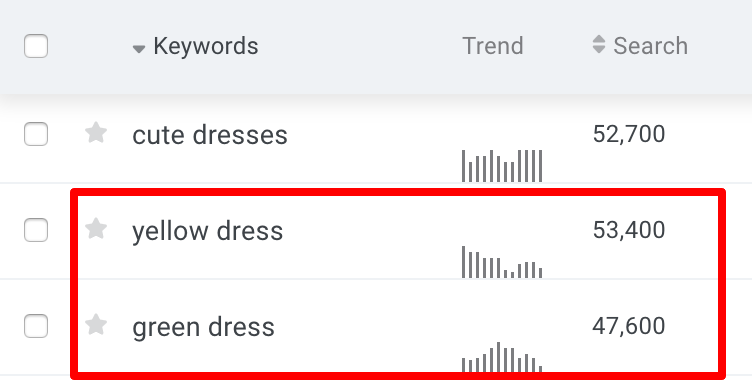
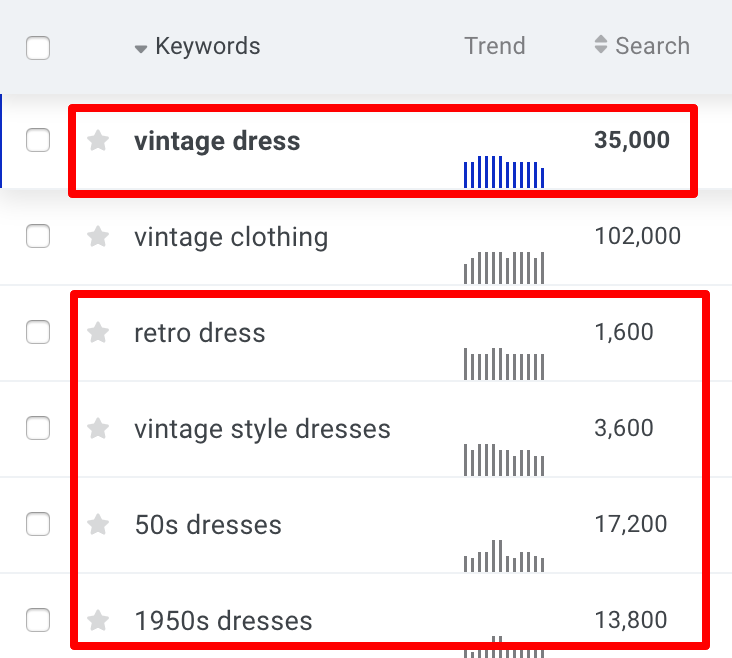
Say your fashion blog already covers dress cuts, evening, summer and autumn dresses. A keyword tool shows other angles: colors (“green dress”, “burgundy dress”), styles (“boho dress”, “wrap dress”) and occasions (“wedding guest dress”). Seasonal data tells you when to publish. See keyword research tools.
Autocomplete and People also ask
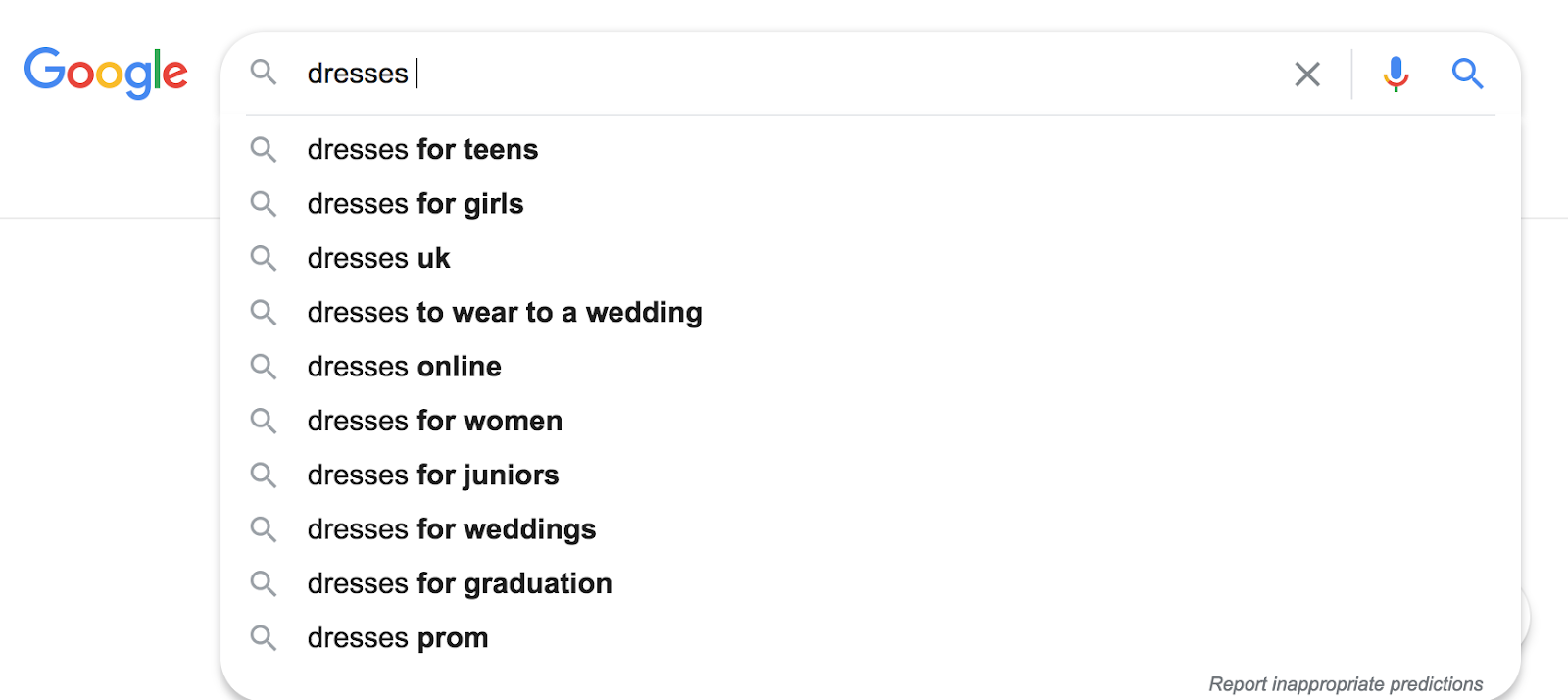
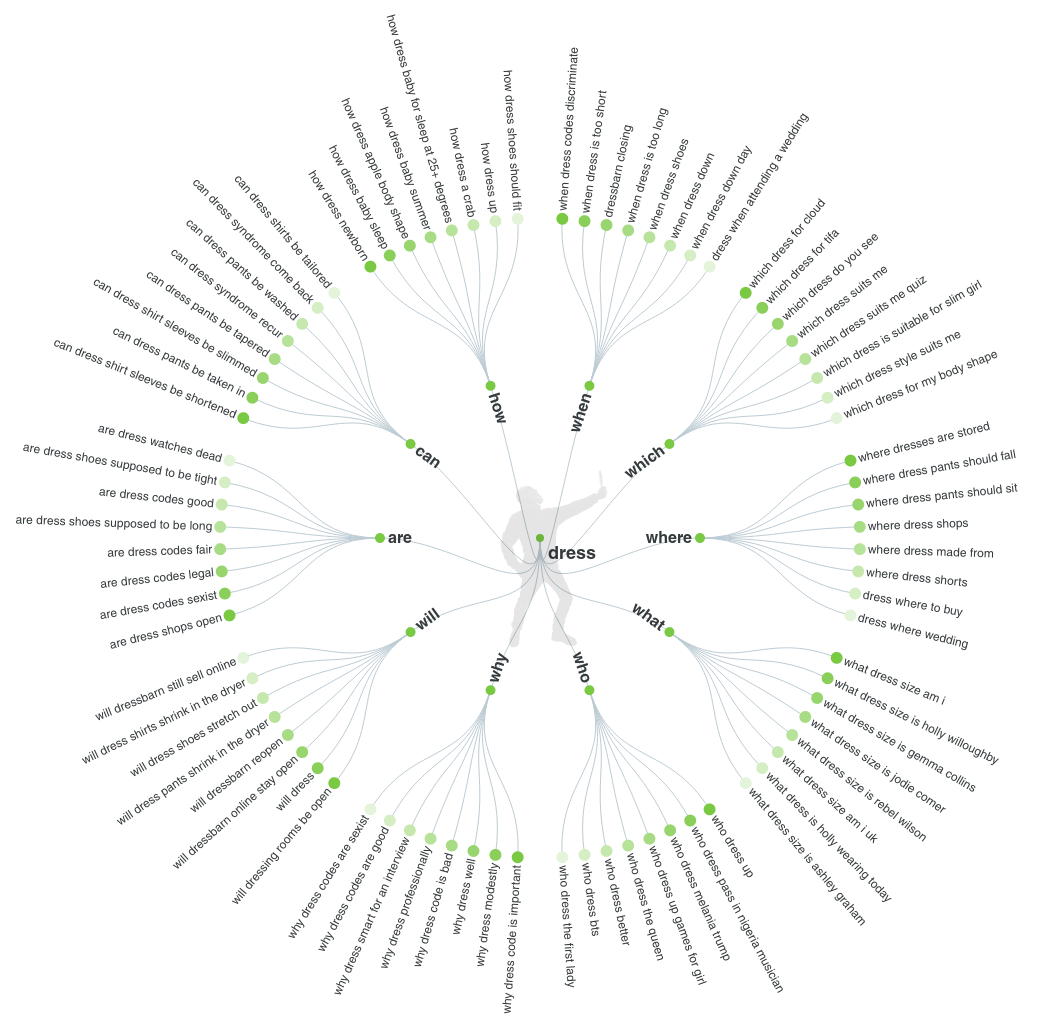
Type a phrase into Google and note the autocomplete predictions; then open People also ask, which expands as you click. Both show the questions and wording people use; they’re signals, not search volumes.
Google Trends
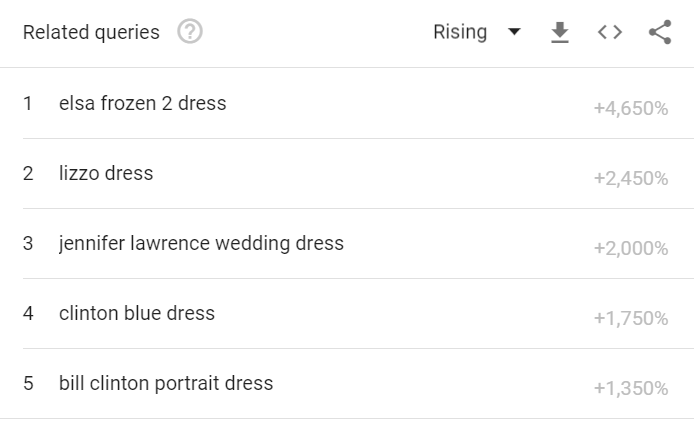
Enter a phrase, choose the country, time range and category, and check “Related queries” (Top and Rising). For “dress”, related queries about celebrities or film characters suggest timely topics. See how to rank for a trend early and our seasonal SEO calendar.
Competitors and Content Explorer
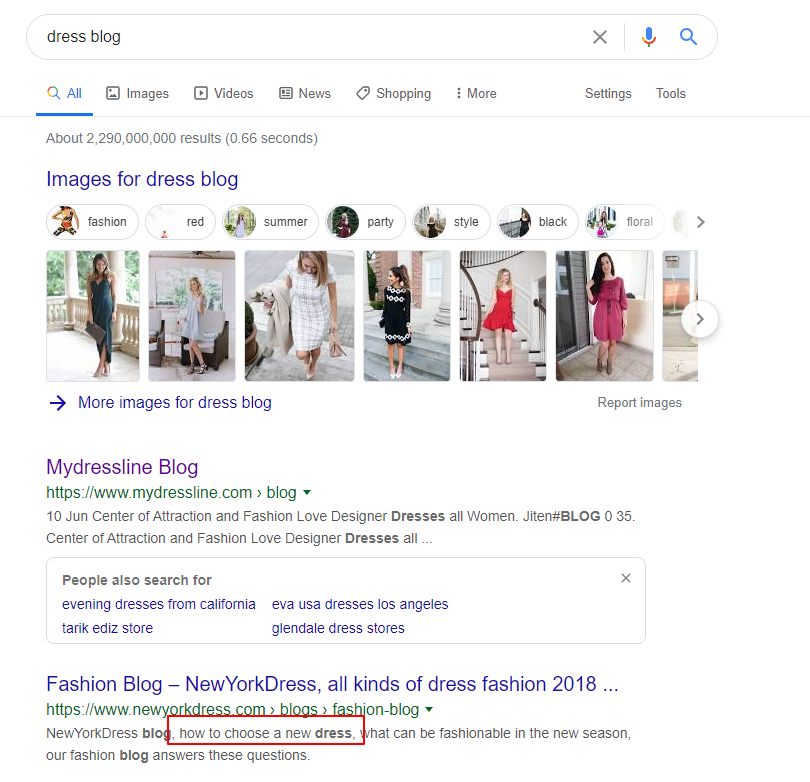
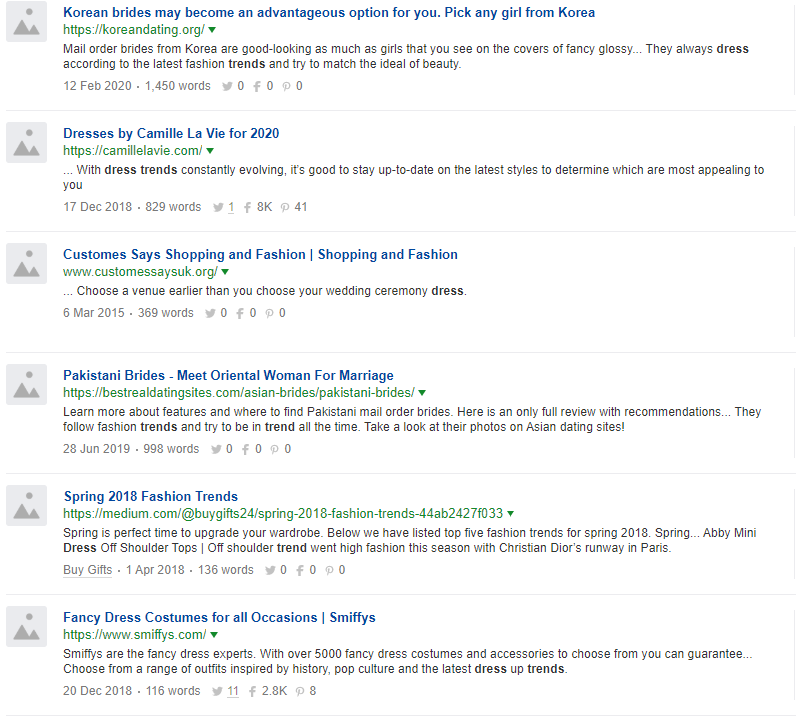
Look at which topics competitors cover and how, then go deeper or answer what they missed, including questions in their comments. A content gap report in Semrush or Ahrefs speeds this up, and Ahrefs Content Explorer shows which pages on a topic gained links and traffic recently.
Communities and AI assistants
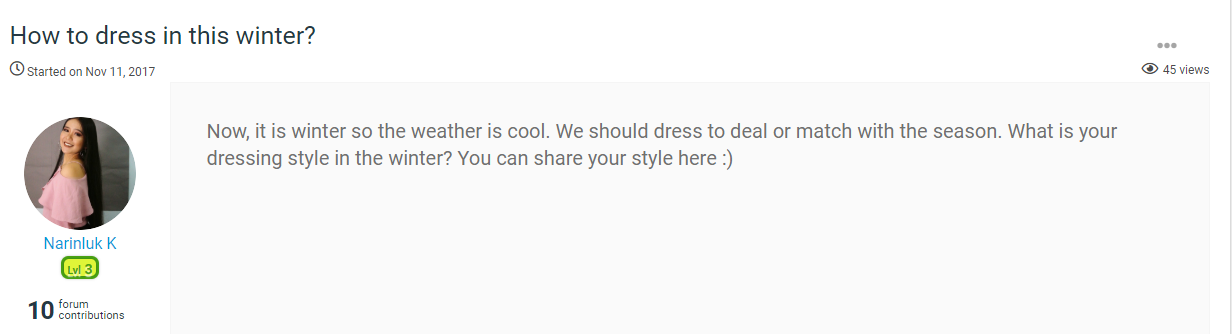
Forums, Reddit, Facebook groups and TikTok comments show real problems in users’ own words. Also ask ChatGPT, Gemini or Perplexity the questions your customers ask: you’ll see what AI already answers, which sources it cites and where answers are thin or outdated. Those gaps are opportunities.

Customers and colleagues
If many customers ask how to choose the right dress size and returns are high, write a detailed size guide. It answers a real question, reduces returns and gives support a link to send. Sales, support and product teams hear such questions every day; ask them regularly.
How do you know if an idea is worth writing?
- Intent: what does the searcher want, and is a blog post the right format? (search intent)
- Fit: is the topic connected to your products or services, so the article can lead to them?
- Overlap: do you already have an article on it? Update it instead of writing a new one (content audit).
- Value: can you add something others don’t have: your data, tests, examples, expert experience? Content with statistics and citations is more visible in AI answers.
- Cluster: does it support a topic you want to own? (topical authority)
Can you use AI to generate blog content?
Use AI to brainstorm topics, group keywords and draft outlines. But publish only content that is useful, accurate and reviewed by someone who knows the subject. Producing many pages mainly to rank, whether by AI or by people, can fall under Google’s scaled content abuse policy. Experience and original insights are what make content trustworthy.
Let your customers find you, wherever they look.
FAQ
What’s the best free tool for blog ideas?
Google Search Console, because it shows the queries your site already appears for. Add Google autocomplete, People also ask and Google Trends.
How many blog ideas should I plan ahead?
A content calendar for the next 2–3 months works for most teams, with room for timely topics and updates of existing articles.
Should I write about topics competitors already cover?
Yes, if you can do it better: more complete, more current or with your own data and experience. Copying their structure won’t help.
Can I use ChatGPT to find blog topics?
Yes, for brainstorming and checking what AI already answers. Verify demand in search data and add your own expertise before publishing.
Sources
- Google Search Help: How autocomplete predictions work
- Google Trends Help: FAQ about Google Trends data
- Search Console Help: Performance report
- Google Search Central: Creating helpful content
- Google Search Central: Spam policies (scaled content abuse)
- Aggarwal et al.: GEO: Generative Engine Optimization (KDD 2024)
About the author: This article was prepared by the Insightland SEO and GEO team. Insightland is a Wrocław-based agency, part of the Hexe Capital Tech Hub, that connects business, tech and data: SEO and GEO, performance marketing, UX and analytics, and SEO and AI training. Contact us.