How Data Visualization Leads to Making Better Business Decisions
Data visualization turns numbers into charts and dashboards that show patterns, trends and outliers at a glance, so teams can decide faster and with more confidence. Collecting data is easy; reading it is hard. A good visualization answers one business question, shows the context needed to judge the result and points to the next action. […]
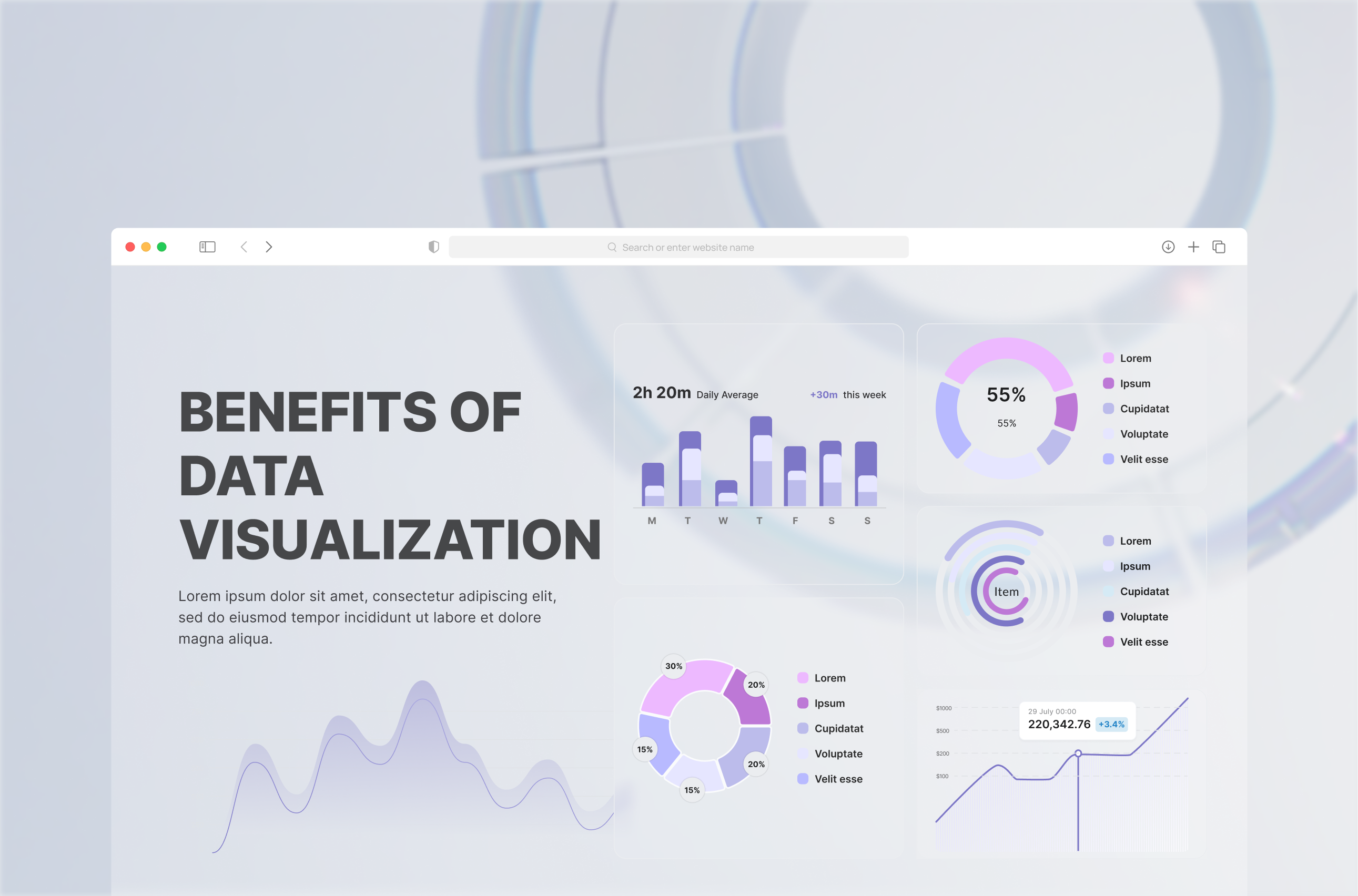

Data visualization turns numbers into charts and dashboards that show patterns, trends and outliers at a glance, so teams can decide faster and with more confidence. Collecting data is easy; reading it is hard. A good visualization answers one business question, shows the context needed to judge the result and points to the next action.
Key takeaways
- Start with the question, not the chart: “Which channel brings the most profit?” needs a different view than “How are sales trending?”
- Choose the chart by the question: line for trends, bar for comparisons, waterfall for changes, funnel for drop-offs, scatter for relationships.
- Always add context: targets, previous period, benchmarks. A number without a comparison isn’t a finding.
- Tools: Data Studio (free, Google data), Power BI and Tableau (BI platforms), Python and D3.js (custom analysis and visuals).
- AI in BI tools can answer questions in natural language, but only on a clean, well-described data model.
Make your brand visible – from Google to AI chatbots.
Why do data-driven decisions need visualization?
A data-driven approach means setting goals, measuring them, analyzing patterns and acting on what you find: changing a strategy, dropping products that don’t sell or shifting budget to channels that work. The challenge is volume. Finding a pattern in thousands of spreadsheet rows is slow and error-prone; on a chart, a drop, a spike or a seasonal pattern is visible in seconds.
Visualization helps in five practical ways:
- Faster reactions: problems (a drop in conversion rate, a failing campaign) are spotted the same day, not at month-end.
- Focus: users see the big picture and can drill down only where needed.
- Pattern recognition: trends, seasonality and anomalies stand out.
- Shared understanding: teams look at the same numbers and definitions, which speeds up decisions.
- One view of many sources: ad platforms, GA4, CRM and sales data side by side. Ad platform reports alone can’t show whether a campaign was profitable.
Which chart answers which question?
| Business question | Chart type | E-commerce example |
|---|---|---|
| How is it changing over time? | Line chart | Daily revenue vs. last year |
| Which is bigger? | Bar chart (sorted) | Revenue or margin by category |
| What makes up the total? | Stacked bar or treemap (pie only for 2–3 parts) | Share of sales by channel |
| What caused the change? | Waterfall | Budget vs. actual: what increased or reduced profit |
| Where do people drop off? | Funnel | Product view → cart → checkout → purchase |
| Are two things related? | Scatter plot | Ad spend vs. revenue by campaign |
| Where is it happening? | Map | Sales by region or store |
| How are we doing vs. target? | KPI tile with comparison, bullet chart | Monthly revenue vs. plan |
What makes a visualization useful for decisions?
- One question per chart, stated in the title (“Mobile conversion fell 18% after the checkout change” is better than “Conversion rate”).
- Context: target, previous period or benchmark next to every key number.
- Clear definitions: what counts as a session, conversion or revenue (gross or net). Write them in the dashboard.
- Simple design: few colors, highlight only what matters, no 3D effects, start bar axes at zero.
- Accessibility: color-blind-safe palettes and labels, not color alone.
- A next step: each dashboard should lead to an action or an owner.
- Reliable data underneath: visualization doesn’t fix tracking errors. Check the setup first; see analytics audits.
Which data visualization tools should you use?
| Tool | Best for | Cost (2026) |
|---|---|---|
| Google Data Studio (called Looker Studio 2022–2026) | Marketing reports on GA4, Google Ads, Search Console | Free (Pro version paid); GA4 connector has API quotas |
| Microsoft Power BI | Data models from many sources, Microsoft ecosystem | Desktop free; Pro $14/user/month |
| Tableau (Salesforce) | Advanced visual analysis and storytelling | Paid licenses; Tableau Public free for public data |
| Qlik Sense | Self-service exploration across sources | Paid; free trial |
| Python (Matplotlib, Seaborn, Plotly, plotnine) | Analysis, statistics, custom and automated charts | Free (open source) |
| D3.js | Fully custom interactive visuals on the web | Free (open source); requires programming |
For a detailed comparison see Data Studio vs Tableau vs Power BI and our guide to Power BI for e-commerce. For large GA4 datasets, connect dashboards to BigQuery instead of the GA4 connector.
How is AI changing data visualization?
BI tools now include AI assistants that answer questions in natural language, suggest charts and summarize reports, for example Copilot in Power BI. They save time, but their answers are only as good as the data model: clear table and measure names, consistent definitions and descriptions. Treat AI answers as a starting point and check the numbers behind them.
Let your customers find you, wherever they look.
FAQ
How does data visualization help decision-making?
It shows trends, comparisons and outliers quickly and in context, so teams spot problems and opportunities sooner and agree on the same facts.
What is the best free data visualization tool?
For marketing data from Google, Data Studio. For custom analysis, Python libraries such as Plotly or Seaborn. Power BI Desktop is free for building reports, but sharing needs a license.
Is Google Data Studio still available?
Yes. Google renamed it Looker Studio in October 2022 and changed the name back to Data Studio in April 2026. Existing reports continue to work.
Which chart should I use to show a trend?
A line chart, ideally with the previous period or target for comparison.
Sources
- Google Cloud: Looker Studio is Data Studio (Apr 2026)
- Google for Developers: GA4 Data API quotas
- Microsoft: Power BI pricing update (Nov 2024)
- Microsoft Learn: Copilot in Power BI
- Tableau Public
- D3.js
- plotnine
About the author: At the time of writing, Marcin Gaworski was an SEO expert at Insightland. Insightland is a Wrocław-based SEO and GEO agency, part of the Hexe Capital Tech Hub. Contact us.